Related Products
For Professionals
- Amplification
- Assessment of Student Skills, Challenges, Needs
- Early Childhood: Infants, Toddlers, Preschool
- Hearing Loss – Identification, Impact and Next Steps
- IDEA Law Summary Information
- Language and Speech Development Issues
- Legal Issues in Serving Children with Hearing Loss
- Listening (Auditory Skills) Development
- Planning to Meet Student Needs
- Self-Advocacy Skills for Students with Hearing Loss
- Self-Concept: How the Child with Hearing Loss Sees Himself
- Social Skills
- Speech Perception & Learning
Related Teacher Tools Takeout Items
Social Skills for Children With Hearing Loss
Why Social Skills for Children With Hearing Loss Matter
Social skills for children with hearing loss include learning how to communicate, make friends, understand emotions, recognize social cues, solve problems, and participate confidently in conversations. Because children with hearing loss may miss subtle communication cues, these skills often benefit from intentional teaching and everyday practice.
Developing social skills for children with hearing loss is just as important as developing speech, language, and academic skills. Strong social skills help children build friendships, communicate confidently, understand emotions, and develop self-advocacy skills that support success throughout school and life. This guide brings together practical resources, assessments, and strategies to help families and educators support healthy social development.
The development of appropriate social skills has many components.
What Are Social Skills for Children?
Social skills are the everyday behaviors children use to communicate, cooperate, solve problems, understand emotions, and build relationships. While many children naturally learn these skills by observing others, children with hearing loss may need more direct instruction and practice because they can miss important conversational and social cues.
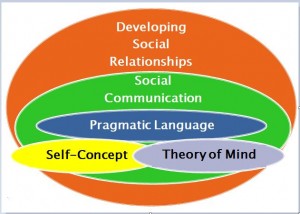
The building blocks of social skills for children with hearing loss illustrate the progression from foundational self-concept and theory of mind to successful relationship development. Credit: Supporting Success for Children with Hearing Loss
Under this SOCIAL SKILLS section, refer to the website for more information on:
- Addressing Self-Esteem and Issues of Fitting In
- Building Your Child’s Self-Confidence
- Self-Concept: How the Child Sees Themselves
- Self-Concept: Infants, Toddlers, Preschoolers
- Self-Concept: School-Age Children
- Self-Concept: Adolescents
- Self-Identity and Hearing Loss
- Social Needs and “I hate my hearing aids!”
- See below for social skills area assessment considerations.
- Also refer to Social Communication- Pragmatics and Theory of Mind – Implications for Social Success
Look here for worksheets to develop social cognition and recognize emotions.
App for recognizing song lyrics so kids can be in tune with current music trends:
Social Skills Worksheets: Sample worksheets to assist with determining needs or identifying concerns.
Source: MN Department of Education, 7/11/17
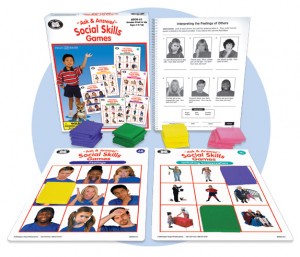
Click here for the “Ask and Answer Social Skills Games.”
Essential Social Skills for Children with Hearing Loss
Social skills include the following:
- Rules of conversation.
- Responding to social cues.
- Saying hello/goodbye.
- Cooperating by taking turns.
- Responding appropriately to questions.
- Being sensitive to the feelings of others.
- Making eye contact.
- Smiling.
- Being polite.
- Problem solving.
- Supporting others/helping.
- Having interesting things to say.
- Reinforcing and acknowledging others’ comments.
- Controlling aggression and inappropriate behaviors.
Conversation Skills for Children with Hearing Loss
- Don’t always wait for someone to talk to you. EVERYONE needs to take a turn at starting a conversation.
- Start talking to someone – it they want to talk about what you said, they will take a turn.
- Don’t talk, talk, talk – take turns as the talker and the listener.
- Pay attention when another person talks to you. Listen so you know when you should take your turn.
- People build a conversation together. Listen to what the other person is saying and add to that topic.
- What you say should be about what the other person just said, unless you are both done with the topic.
- If you don’t understand what the other person said or meant, do not pretend that you did. Ask for clarification.
- Take your turn deciding what to talk about. It is your responsibility to hold up your end of the conversation!
Why Conversation Skills Matter
Learning to take turns, listen actively, stay on topic, and recognize conversational cues helps children participate more confidently in school, at home, and with friends.
Click here for the “Building Skills for Success in the Fast-Paced Classroom: Optimizing Achievement for Students with Hearing Loss”
Building Friendships Through Strong Social Skills
How to be Cool: Results of a study with a real group of teenagers tasked with defining COOL. Part of having self-confidence is knowing that you are ‘okay’ even when you receive some negative messages from peers. The How to Be Cool handout lists different aspects of ‘cool,’ including speaking up for yourself and not being afraid to be different.
Understanding Social Communication Styles
The Social Communication Styles quiz sets the stage for developing self-advocacy by thinking about communication style.
Practicing Friendship Skills Through Activities
Making a Friendship Sandwich: An activity to teach the rules of conversation
Social Skill Areas Definitions and criteria of the 4 social skill areas followed by specific social skill situations for elementary, junior high, and high school for home and school situations. Purpose: to provide a structure for goals and role-playing discussions to practice social skills.
How to Access Social Skills for Children With Hearing Loss
Understanding a child’s strengths and challenges is an important first step in supporting social development. Several evidence-based assessment tools can help families and professionals identify areas that may need additional support.
Social Skills Area Assessment Considerations
Evaluation needs to be tailored to assess specific areas of educational need (§300.304(c)(2)). Because we recognize that social/emotional development may be an area of need for students with hearing loss, the following section of IDEA is especially relevant:
Part 300 / D / 300.304 / c / 4 (4) The child is assessed in all areas related to the suspected disability, including, if appropriate, health, vision, hearing, social and emotional status, general intelligence, academic performance, communicative status, and motor abilities.
Social Skills Checklists: This checklist is a guide for all teachers of the D/HH and their districts to use with D/HH children, birth-21. This checklist is a guide/tool for the Teacher of the Deaf/Hard-of-Hearing. Source: MN Department of Education. 7/11/17.
Less Effective Assessments for Children who are DHH in Inclusive Settings
Children with hearing loss are a very diverse group. When most of the students we served were functionally Deaf and educated in center-based programs, the Meadow-Kendall Social-Emotional Inventories that were normed on this population were very appropriate to use to assess these areas of need. Now most of our students spend the majority of time in the mainstream, and it is most appropriate to compare their social/emotional needs to those of their typically hearing class peers. Thus, this long-used assessment should no longer be the ‘go-to’ for most of our students. So what can we use?
When school psychologists perform a social/emotional assessment, the usual areas of need they are most likely to identify are impulsivity, lack of ability to attend, depression, or non-compliant behavior. Although our students can experience these issues, the hearing loss may cause behaviors that suggest these issues, but the behavior is due to hearing loss and not other issues. For example, if the teacher completed the
Conners Behavior Rating Scale: A student with hearing loss may seem off task and inattentive when the real reason is fragmented hearing and not receiving all of the information or excessive effort to listen, resulting in periods of distractibility. Likewise, the Behavior Assessment System for Children may identify a child as depressed when instead the student is hyperfocused on trying to get information auditorily and visually and seems to have little affect or interaction.
Online Game to Assess and Improve Social/Emotional Skills Created by a team of researchers, artists, and game developers, Zoo U is the only research-proven online game that assesses and improves children’s social and emotional skills.
“Game Time! Board games serve as an excellent interactive tool to foster social skills for children with hearing loss. (Image source: Public Domain Clipart)”
These skills include:
- impulse control and self-management
- emotion regulation
- communicating effectively
- showing empathy
- social initiation
- cooperating with others
Developed with funding from the US Department of Education. Zoo U is geared toward students in grades K through 5 and can be administered to one child or to many children at once. Because the assessment is a game, children stay engaged and motivated. In Zoo U, players are students in a school for future zookeepers, where Principal Wild and a host of friendly animals help them learn social and emotional skills as they navigate common school-based social scenarios. Educators can sign up for a free trial of Zoo U. Find out more about the Zoo U games.
The key is the need to have someone on the evaluation team (YOU) who can discuss the results of these measures with the team in terms of the ‘DHH Lens.’ Adding teacher checklist information about specific behaviors that are of most concern for students with hearing loss and discussing the results with the evaluation team in addition to other testing performed can help you to ‘make the case’ that there may be more social and emotional challenges than are easily identified by using standard measures alone.
Specific Assessment Suggestions:
- Social-Emotional Assessment/Evaluation Measure is completed by parents of infants, toddlers, and preschoolers (up to 66 months). Preschool teachers can also complete the form. It is most useful if parents/teachers review skill development and identify areas of concern over time.
- The Social Language Development Test is a norm-referenced test that delves into pragmatic language use, social cognition, making inferences, peer negotiation, and multiple interpretations of social information. Grades 1-6: Low performance in any of these areas is likely, in combination with hearing loss, to impact social interaction.
- Pragmatic Language Skills Inventory is a teacher checklist that can be completed in 10 minutes. Great psychometrics allow this inventory to be used to identify functional social language issues. It is designed for children ages 5 through 12; it has 3 subscales: Personal Interaction Skills, Social Interaction Skills, and Classroom Interaction Skills.
- Children’s Peer Relationship Scale can provide very useful information about how isolated or integrated a child feels. Although it is not normed, this data can add insights to the results of other test measures.
- Does this student have a poor self-concept? This checklist asks the classroom teacher or the DHH teacher, in discussion with the classroom teacher, to consider 15 behaviors. All items are presented negatively, such as “Expresses feelings of not belonging” or “Gives up easily.” This checklist is not normed but can provide very important insights to consider in addition to other assessment information.
- Think About It Quiz is a checklist for teens to assess self-concept. It asks the teen to judge themselves against their peers in five different domains, including peer acceptance. There is a cutoff score to identify areas of concern.
- Social skills checklists can also be completed by the teacher, such as the Social Skills Checklist (Pre-K/Elementary), Social Skills Checklist (Secondary), and The Social Attributes Checklist.
If we truly tailor assessment so that the vulnerable areas of development specific to the access issues of hearing loss are considered AND we examine functional performance in a classroom setting (or predictive measures), I believe that most children with hearing loss can be found to be eligible for specialized instruction and related services. Refer to Steps to Assessment – for case examples and specifics on assessment.
Practical Ways to Teach Social Skills for Children
At Home
- Practice conversations.
- Role-play social situations.
- Read books about emotions.
- Talk about facial expressions.
- Encourage turn-taking games.
At School
- Cooperative learning
- Peer buddies
- Small-group discussions
- Classroom modeling
- Structured social opportunities
Through Everyday Activities
- Grocery store
- Playground
- Family meals
- Sports
- Community events
Why Social Skills Support Lifelong Success
Developing social skills for children with hearing loss helps children build friendships, communicate effectively, solve problems, and become confident self-advocates. These skills support success in school, relationships, employment, and everyday life.
Social Skills for Children: Key Takeaways
- Social skills influence friendships and confidence.
- Children with hearing loss may benefit from direct instruction.
- Conversation skills improve communication.
- Social-emotional learning supports overall development.
- Parents and educators play a key role.
- Practice in everyday situations builds lifelong skills.
Frequently Asked Questions About Social Skills for Children With Hearing Loss
Why do children with hearing loss often require explicit instruction for social skills?
Typical-hearing children learn many social norms through incidental hearing—spontaneously overhearing conversations, tone changes, and background social interactions. A child with hearing loss misses these subtle cues. Explicitly teaching social skills for children helps bridge this gap, equipping them to read facial expressions, take conversational turns, and build lasting peer relationships.
What are pragmatic language skills, and why do they matter?
Pragmatic language refers to the unwritten rules of social communication—knowing how to use language in different contexts. It includes knowing how to introduce a topic, adjust tone based on the audience, interpret non-verbal facial cues, and repair a communication breakdown. Mastering pragmatic skills is what transforms basic speech into meaningful social connection.
Why do children with hearing loss struggle with group conversations and friendships?
Social fatigue and background noise play massive roles:
| Social Barrier | What the Child Experiences | Long-Term Social Impact |
| Overhearing Gaps | Missing fast-moving playground chatter or side comments. | Feeling left out or misunderstood by peers. |
| Listening Fatigue | Expending extreme mental energy to lipread and process speech. | Social withdrawal due to sheer cognitive exhaustion by the end of the day. |
| Subtle Cue Misses | Difficulty catching sarcasm, gentle teasing, or changes in tone. | Misinterpreting peer intentions or feeling socially anxious. |
How can parents and educators teach social skills at home and in the classroom?
To move beyond generic advice, follow this actionable three-step strategy to help children practice and master real-world interactions:
- Role-Play Common Social Scenarios
- Home Practice.
- Practice everyday situations like joining a game, introducing oneself to a new friend, or asking for a turn. Role-playing gives children a safe, zero-pressure space to rehearse their scripts.
- Structure Cooperative Group Work:
- Classroom Setup.
- Teachers can pair students intentionally and enforce clear “one-speaker-at-a-time” rules. Structured small groups ensure the child with hearing loss isn’t overwhelmed by competing voices.
- Teach Communication Repair Scripts:
- Self-Advocacy Integration.
- Equip the child with comfortable ways to speak up when they miss something (e.g., “I missed that last part—can you say it one more time?”). Treating self-advocacy as a core social skill prevents social withdrawal.
Can social skills improve over time in children with hearing loss?
Yes, absolutely. Social communication is a flexible skill that grows through guided modeling, direct practice, and positive experiences. As children gain confidence in managing communication breakdowns, their ability to navigate complex social settings and build deep friendships expands naturally.
Other Resources
- Social Communication in Challenging Situations: The Child Role Play Measure for ages 7-10 years. This measure provides role-play situations that can then be scored to identify if children have typical responses to challenging
- Minnesota Social Skills Checklist for Students who are Deaf or Hard of Hearing
Continue Learning About Social Skills, Self-Concept, and Self-Confidence
- Key Factors in Language, Social, and Developmental Outcomes
- Bullying and Students with Hearing Loss
- One Cost of Being the Lone DHH Kid & the Need to Assess Social/Emotional Issues
- Self-Advocacy Skills for Students with Hearing Loss
Originally published: June 2018
Last update: June 2026