Related Products
For Professionals
- Amplification
- Assessment of Student Skills, Challenges, Needs
- Early Childhood: Infants, Toddlers, Preschool
- Hearing Loss – Identification, Impact and Next Steps
- IDEA Law Summary Information
- Language and Speech Development Issues
- Legal Issues in Serving Children with Hearing Loss
- Listening (Auditory Skills) Development
- Planning to Meet Student Needs
- Self-Advocacy Skills for Students with Hearing Loss
- Self-Concept: How the Child with Hearing Loss Sees Himself
- Social Skills
- Speech Perception & Learning
Related Teacher Tools Takeout Items
Accommodations for Sports and ExtraCurricular Activities
Accommodations for students with hearing loss in sports and extracurricular activities help ensure equal access under the ADA and Section 504. Schools must provide effective communication and appropriate supports so students can participate safely and fully in team practice, games, and school events. This page shares common accommodations, sport-specific suggestions, and how parents can request supports.
Summary: If it is known that a student with a HA/CI/FM system or sign language interpreter is going to participate in a school-sanctioned sport, it is the school’s responsibility (whether it’s the athletic department, teacher of the deaf/hard of hearing, educational audiologist, or some school official) to contact the governing body over athletics in the state to obtain a letter stating that this accommodation is allowed. This letter should be carried by the coach; in the event they are being questioned by an official, they have documentation. The rules for club teams not associated with a school may have a different protocol for getting such a letter, but under the ADA, that student should still be allowed access to information with accommodations to participate.
Sports and Extracurricular Activities
The following features information from a 1996 publication, Time Out! I Didn’t Hear You!, that has been an invaluable resource to many parents and professionals who want to support children’s participation in sports and other extracurricular activities, even though they have a hearing loss. The authors, Catherine Palmer, Stacy Butts, George Lindley, and Susan Snyder, have graciously permitted excerpts of this 88-page publication and the full link to be included on Supporting Success for Children with Hearing Loss.
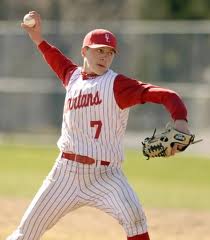
Photo via Just Minors, “Jess Todd 2007 Rookie Card
Extracurricular activities and sporting events may be very important for the overall educational and social experience of a child. For most children, the school day does not end at the sound of the bell of the last academic class. Many lessons about teamwork, responsibility, winning, and losing happen in ‘after-school’ activities that are sponsored by the school. All children have the right under the law to access these after-school activities in the least restrictive way, just as they have a right to access the academic offerings of a school. Time Out! I Didn’t Hear You provides the student, parent, coach, athletic director, principal, school board member, and educational audiologist with all the information needed to make athletics accessible in the most cost-effective, comfortable way.
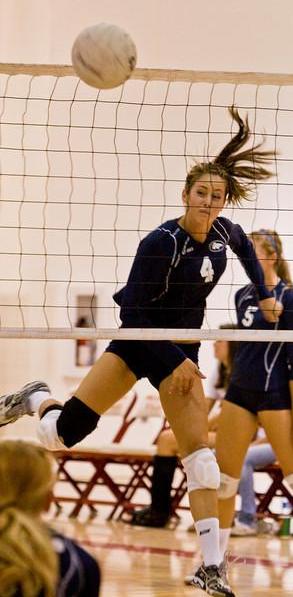
Photo by Laura Stoecker / Daily Herald
The use of assistive devices is an important part of making high school athletics more accessible to athletes with hearing loss.
There are a multitude of relatively inexpensive devices that can be used for almost any difficult communication situation that can occur during practice and training. In some sports, assistive listening devices can be integrated, within the boundaries of the rules, into the game itself. It is the responsibility of the coach, the athlete with hearing loss, and the other team members to work together to identify where communication breakdowns are occurring and to identify solutions. The devices themselves are simply tools that people use to try to come as close as possible to the ideal situation.
Three federal laws guarantee access to students with hearing challenges, their parents, and individuals who work with them. In essence, each of the laws says that students with hearing impairments should have access to whatever all of the other students have access to – nothing more, nothing less. For instance, if there is a soccer team for students at the school, the student with a hearing impairment should have the right to try out for that team. If needing to receive instructions during tryouts is essential for a successful tryout, then the student with a hearing impairment is entitled to whatever is needed for him/her to receive the instructions. The use of assistive devices and communication strategies is meant to create a ‘level playing field’ for these students. Refer to pages 33-37 of Time Out! for information about these laws and students’ rights to equal access and participation.
Specific Accommodations Suggested for the Following Sports and Extracurricular Activities
The Time Out! The publication provides rich information, whereas the table below provides a brief summary of the information provided on accommodations for specific sports. Refer to pages 50–81 of Time Out! for details. It is common for individuals to perspire while playing sports. Hearing moisture-resistant devices should be used and/or protective devices for hearing aids, like Ear Gear or SuperSeals.
| Activity | Suggested Accommodations for Competition |
| Archery | Hearing devices + FM; red/yellow/green signal lights, tactile stimulator on wrist |
| Badminton | Hearing devices; large hand gestures prior to calling for the ball; FM to hear the umpire |
| Basketball | Red light behind each backboard lights at the end of a quarter; portable loop system around the bench with the coach using the microphone, plus hearing devices |
| Bowling | Hearing devices; visual stimulus or scorekeeper/teammate to notify the bowler if s/he has fouled. |
| Canoeing | Hearing devices; Buddy system to relay announcements; person with hearing loss in rear seat; visual signals or flag in conjunction with a ‘go’ gunshot; |
| Cross Country | Hearing devices; visual signals; red/yellow/green light for ready/set/go or flag in conjunction with a ‘go’ gunshot; |
| Curling | Simple signal system between players while on ice; FM during time-out conference with coach |
| Diving | Assistive listening device with headphones for coaching advice on the pool deck; visual signs for scores. |
| Fencing | Visual signals in addition to auditory signals for on guard/ready/fence and tactile device on wrist/ankle |
| Field Hockey | Hearing devices + FM for communication between player and coach during sideline discussions. Hand motions and shoulder taps to bring the attention of the player with hearing loss to the coach |
| Football | Hearing aid within a modified helmet (info provided); visual signals between players during plays |
| Golf | Hearing devices + FM to use with the advising partner |
| Gymnastics | Receive coaching advice via hearing devices and remove them while competing; visual scoring |
| Judo | The coach must have the attention of the competitor before making appropriate gestures or visual signals |
| Lacrosse | Hearing devices + FM for communication between player and coach during sideline discussions; head gear may allow for use of hearing devices during play; hand gestures between players |
| Riflery | Hearing protection; thorough knowledge of firing range protocol commands; vibrator on wrist |
| Rowing | Use of a red flag and verbal commands to signal start; pre-determined signals to correspond with verbal commands (person in front of individual with hearing loss brings a foot down to signify go) |
| Rugby | Due to the physical nature of sport, an ITE hearing aid with a soft canal is recommended for safety. Buddy system to relay coach messages as players are substituted, or use of hand gestures |
| Skiing | Hearing devices and visual starting procedures, such as red/yellow/green lights visible to all competitors |
| Soccer | Hearing devices are allowed as long as there is no threat of injury. ITE aid with a soft canal is recommended. Players deliver messages during substitutions and/or hand gestures. Use FM or a loop for coach conferences. |
| Softball | Hand signals for each umpire call are used by the closest teammate on the field or between the coach/players |
| Swimming | Raised a flag for ‘on your mark’ and dropped a flag for ‘go.’ It can occur in conjunction with a gunshot or a strobe light. Drop the flag in the water in front of the swimmer when a false start occurs. |
| Table Tennis | Hearing devices + FM for in-between game conferences with partners. Hand signals between partners for use during play. |
| Tennis | Hearing devices. Use of hand signals during doubles. Visual score cards. |
| Volleyball | Use of hand signals during the game; visual scoreboard. Visual signal to accompany whistle signals. |
| Water Polo | Hand signals between players. Use a whistle and flag to signal the start of plays or to indicate fouled plays; you may also add hand signals. |
| Weightlifting | Hearing devices; extra cuing by coach or teammates as needed when it’s the individual’s turn. |
| Wrestling | Hearing aid use may not be recommended due to the physical nature of sports. Locate the individual next to the coach when possible. If an individual cannot easily hear the whistle ‘go’ signal, it could be augmented by the coach banging the mat as a tactile signal to the competitors. |
Sports and Extracurricular Accommodations
Having a hearing loss didn’t stop these competitors!
Refer to page 83 of Time Out! for more information on these successful individuals with hearing loss.

Heather Whitestone crowned Miss America 1995. (Photo: Getty Images)
- Heather Whitestone: At 21 years of age, Heather Whitestone became the first Miss America with significant hearing loss in the history of the pageant. Not only has she won the Miss America pageant in 1995, but she has also earned impressive academic success, graduating from an Alabama high school, where she was mainstreamed with children, earning an A average.
- Jim Ryun: At 45 years of age, Jim Ryun, a former Olympic medalist and world record holder in middle-distance running, tried on his first pair of hearing aids. Although Ryun was born a gifted athlete, he needed to overcome the challenges of his hearing loss. Ryun had to compensate for simple things that many runners take for granted, such as hearing the starter’s pistol or hearing their competitor’s footsteps behind them.
- Curtis Pride: Born on December 17, 1968, Curtis John Pride was welcomed into a world with a profound hearing loss. He was fully mainstreamed into his neighborhood schools by seventh grade and graduated from high school with a 3.6 GPA. Along with his academic success, Curtis enjoyed a great deal of athletic success as well. He was awarded a full basketball scholarship, but just before his high school graduation, Curtis was drafted by the New York Mets. Valuing his education,

Curtis Pride, Montreal Expos / Photo via archival baseball distribution. Provided for educational purposes.
- Neil Gwinn: Neil Gwinn is an elementary school guidance counselor and a high school soccer coach in Howard County, Maryland. In his ‘spare’ time, he is an assistant coach and player for the United States Deaf Soccer Organization (USDSO). Neil has had a progressive hearing loss since childhood. Gradually, hearing aids were not useful to Neil, and he received a cochlear implant in June 1995.
Frequently Asked Questions About Sports and Extracurricular Accommodations for Students With Hearing Loss
Can students with hearing loss participate in school sports?
Yes. Students with hearing loss have the right to take part in sports and extracurricular activities with the right accommodations and communication access. Schools can use visual cues, interpreters, FM systems, captioning, and other supports to help students participate safely and fully with their peers.
Can students wear hearing aids during sports?
Often, yes. Whether a student can wear hearing aids during practice or games depends on the sport, safety, and the student’s comfort. Some use protective headbands or helmet modifications, while others remove devices during contact sports and rely on other communication supports.
Are cochlear implants safe during athletics?
Many students with cochlear implants play sports safely. Safety depends on the sport and how much contact is involved. Families should check with the audiologist or implant team about protective gear, helmet fit, and sport-specific safety tips.
What accommodations help deaf and hard-of-hearing students during sports?
Useful supports may include:
- Visual signals and hand signals.
- Written instructions.
- FM systems.
- Interpreters.
- Peer buddies.
- Visual timers.
- Vibrating alert systems.
Coaches can also help by facing the student when speaking and reducing background noise when possible.
| Sport | Possible Accommodation |
|---|
| Soccer | Visual signals, FM during coaching |
| Swimming | Visual start cues, strobe lights |
| Basketball | Visual timers, coach communication support |
| Wrestling | Tactile start cues, positioning near the coach |
Can students use FM systems during sports and extracurricular activities?
Yes. FM systems and other assistive listening tools can often be used during practice, team meetings, and some competitions. They help students hear coaches, teammates, and instructions more clearly, especially in noisy gyms, fields, auditoriums, and locker rooms.
Do schools have to provide accommodations for extracurricular activities?
Yes. Under Section 504 and the ADA, schools must provide equal access to extracurricular activities. Accommodations may be needed so students with hearing loss can participate safely, communicate effectively, and join in school programs and events.
How can coaches support athletes with hearing loss?
Coaches can help by using:
- Clear communication.
- Visual demonstrations.
- Written instructions.
- Hand signals.
- Consistent routines.
It also helps to get the student’s attention before speaking and to check for understanding. An inclusive team environment boosts communication and confidence.
What should parents discuss with coaches before a sports season begins?
Parents may want to talk about:
- Hearing technology and how it works.
- Communication needs.
- Safety considerations.
- Emergency procedures.
- Accommodations that help their child succeed.
Sharing how the student hears best during practice and games helps coaches prepare supportive strategies early.
Can hearing loss affect communication during team sports?
Yes. Background noise, distance, whistles, overlapping conversations, and fast-paced environments can make communication hard. Visual signals, assistive listening devices, and clear coaching strategies can improve understanding and keep students engaged.
Why are extracurricular activities important for students with hearing loss?
Sports and extracurricular activities help students build friendships, confidence, leadership, teamwork, and social communication skills. Equal access supports emotional well-being, school connection, and overall growth while encouraging inclusion in the school community.
Additional Sports and Extracurricular Resources:
Helmets & Hearing Aids/Processors
What is a 504 Plan?
School Supports, Modifications, and Accommodations for Students
Communication Access with Schools with ADA Accommodations
Information from Time Out! was excerpted by Karen L. Anderson, PhD, and provided with the permission of the authors. Information was posted on Supporting Success for Children with Hearing Loss in February 2013.
Last Updated: June 3, 2026.