Related Products
For Professionals
- Amplification
- Assessment of Student Skills, Challenges, Needs
- Early Childhood: Infants, Toddlers, Preschool
- Hearing Loss – Identification, Impact and Next Steps
- IDEA Law Summary Information
- Language and Speech Development Issues
- Legal Issues in Serving Children with Hearing Loss
- Listening (Auditory Skills) Development
- Planning to Meet Student Needs
- Self-Advocacy Skills for Students with Hearing Loss
- Self-Concept: How the Child with Hearing Loss Sees Himself
- Social Skills
- Speech Perception & Learning
Related Teacher Tools Takeout Items
IEP Planning Guide for Students with Hearing Loss (fillable)
Steps to Assessment – Guiding Questions
Tailored Assessment for Students with Hearing Loss: Identifying Needs to Support Eligibility for Special Education
Testing Accommodations – ADA Requirements
Understanding Student Assessment: Key Concepts and Considerations for Deaf and Hard-of-Hearing Learners
Basic Types of Assessment
Educational assessments generally fall into four categories:
- Formative Assessment: Ongoing checks during instruction to monitor progress and adjust teaching (Black & Wiliam, 1998).
- Summative Assessment: End-of-unit or standardized evaluations to measure achievement against benchmarks.
- Diagnostic Assessment: Identifies strengths, weaknesses, and learning needs before instruction.
- Screening: Quick checks to flag potential issues for further evaluation.
Qualitative vs. Quantitative Testing
Educational assessments generally fall into four categories:
- Qualitative Assessment yields descriptive data, such as observations, interviews, and portfolios. It provides rich insights into learning processes and contextual factors (Lincoln & Guba, 1985).
- Quantitative Assessment produces numerical scores, enabling statistical comparisons and progress tracking. Standardized tests are typical examples.
Both approaches complement each other: qualitative data explains why a student performs as they do, while quantitative data shows how much progress has been made.
Normed vs. Non-Normed Assessments
- Norm-Referenced Tests compare a student’s performance to a representative sample (e.g., national norms). They answer, “How does this student compare to peers?”
- Criterion-Referenced Tests (non-normed) measure mastery of specific skills or standards, answering, “Has the student met the learning objectives?”
Determining Appropriate Age Range
Assessment manuals specify age ranges based on validation studies. Using tools outside their validated range can compromise reliability and validity (Salvia, Ysseldyke, & Bolt, 2017). Always consult the technical manual for age applicability.
Choosing Appropriate Testing
Selection should consider:
- Purpose (diagnosis, progress monitoring, eligibility)
- Language and Communication Mode (spoken, signed, bilingual)
- Cultural and Linguistic Bias
- Accessibility Features (visual supports, interpreters)
A Few Assessments to use with Children who are DHH:

- Social-Emotional Assessment / Evaluation Measure (SEAM)– Measures social and emotional development in infants-pre-school. (quantitative)
- SPICE – Speech Perception Instructional Curriculum & Evaluation-designed to help you: evaluate a student’s speech perception abilities and plan auditory skills instruction. (qualitative)
- Social Language Development Test – Elementary: measures the language required to appropriately infer and express what another person is thinking or feeling within a social context, to make multiple interpretations, take mutual perspectives, and negotiate with and support their peers. (Normative)
- The Listening Comprehension Test 2 -assesses listening through natural classroom situations language. (Standardized)
- Listening Comprehension Test-Adolescent LCT-A:NU– evaluates a student’s abilities in listening comprehension skills, resulting in a Listening Comprehension Index.
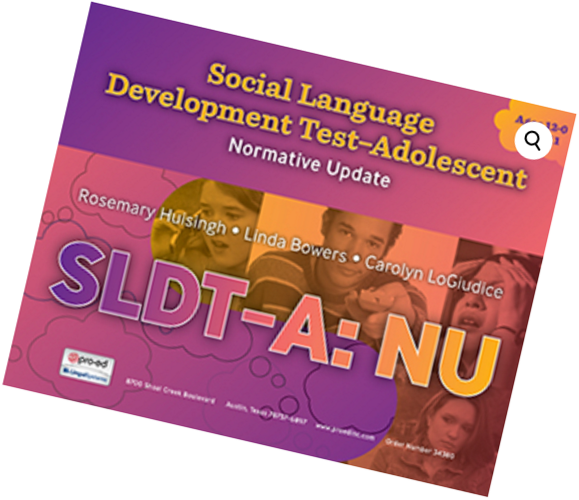
- Social Language Development Test-Adolescent: Normative-Update measures students’ ability to make inferences and interpret and respond to social interaction. (Normative Data)
Common Questions about Assessment: Q & A
Do All Assessments Work for DHH Children?
No. Many standardized tests assume auditory access and spoken language proficiency, which can be a disadvantage to DHH students. Tests should be adapted or replaced with tools validated for this population (Marschark & Hauser, 2012).
For students who already receive special education, does a Permission to Re-Evaluate or Permission from the parent form need to be signed?
Yes. Even if the student already has an IEP, IDEA requires written parental consent before conducting a re-evaluation that involves formal assessments.
This is because:
• Re-evaluation is considered a formal evaluation under IDEA.
• Consent ensures parents are informed about what assessments will be administered and why.
Under IDEA (Individuals with Disabilities Education Act) formal evaluation refers to any comprehensive, standardized, and systematic assessment process used to determine:
• Eligibility for special education services
• Continued eligibility during re-evaluation
• Educational needs and appropriate programming
This typically involves standardized tests, observations, and other data collection methods documented in an evaluation report.