Related Products
For Professionals
- Amplification
- Assessment of Student Skills, Challenges, Needs
- Early Childhood: Infants, Toddlers, Preschool
- Hearing Loss – Identification, Impact and Next Steps
- IDEA Law Summary Information
- Language and Speech Development Issues
- Legal Issues in Serving Children with Hearing Loss
- Listening (Auditory Skills) Development
- Planning to Meet Student Needs
- Self-Advocacy Skills for Students with Hearing Loss
- Self-Concept: How the Child with Hearing Loss Sees Himself
- Social Skills
- Speech Perception & Learning
Related Teacher Tools Takeout Items
Teen Transition Planning for Deaf and Hard of Hearing Students
Teen transition planning that works for Deaf and Hard-of-Hearing students needs a big change from passive compliance to active, clear teaching. Accommodations are legally required and supervised by adults in the traditional K-12 system. But once a student graduates, that bubble of protection is gone. Deaf and hard-of-hearing adolescents typically find it difficult to move to postsecondary education and work without tailored teen transition planning. True readiness is not just the normal IEP paperwork; it’s also preparing the teen to be their own primary advocate.

Photo Credit: Focuspocusltd / Depositphotos
What is Teen Transition Planning?
Teen transition planning is the process of preparing students for life after high school. For deaf and hard-of-hearing students, transition planning focuses on self-advocacy, communication access, education, employment, independent living, and community participation.
The Legal and Practical Timeline for Teen Transition Planning
Transition services are required for students who are receiving specialized services under IEPs, starting no later than age 14. Unfortunately, transition is often thought to be satisfied by a check-off form with little true instruction. Effective and timely instruction during transition is necessary for the future success of students who are Deaf or Hard-of-Hearing.
⚠️ The Half-Job Trap:
If your curriculum only teaches a student to name their parts of a hearing aid (self-advocacy) without teaching them how to independently negotiate accommodations with a hostile workplace manager (self-determination), you are only doing half the job.
The K-12 Independence Continuum:
- Foundational Self-Advocacy
- Ages 3 to 10 (Preschool – Grade 4)
- Focus entirely on device mechanics, basic disclosure scripts, and notifying an adult when technology fails or stops transmitting audio.
- Active Situational Problem Solving
- Ages 11 to 13 (Middle School)
- Transition toward self-determination frameworks. Students learn to independently evaluate changing acoustic spaces, manage multiple teacher dynamics, and lead segments of their own IEP meetings.
- Legal Literacy & Workplace Transitions
- Ages 14+ (High School & Beyond)
- Focus on civil rights under the Americans with Disabilities Act (ADA), coordinating with Vocational Rehabilitation (VR) agencies, and navigating the nuances of workplace disclosure.
* Federal law mandates transition planning to be active by age 16, but many progressive state regulations push this mandate down to age 14.
Why Standard IEP Transition Checklist Fall DHH Students
Under the Individuals with Disabilities Education Act (IDEA), formal transition services are required to begin no later than age 14. Unfortunately, in many mainstream schools, this critical milestone is reduced to a passive, annual compliance form. True postsecondary readiness cannot be completed on a checklist. For students who are deaf or hard-of-hearing, independent success requires an active blend of two distinct instructional pillars: self-advocacy and self-determination.
| Mastery Area | Core Definition | Target Skill Application |
| Self-Advocacy (The Mechanics) | Knowing the functional impacts of your hearing loss and how to explicitly request help. | “My FM receiver microphone is cutting out; please change the battery channel.” |
| Self-Determination (The Problem-Solving) | The internal ability to set goals, track progress, and take responsibility for outcomes. | Identifying a communication breakdown during a job interview and independently deploying a repair strategy. |
The Self-Determination Shift
True teen transition planning must explicitly teach a student how to evaluate their environment, anticipate communication breakdowns, and self-advocate without a parent or teacher intervening.
| Milestone Target | Compliance Requirement | Actionable Teen Transition Planning |
| Self-Advocacy | Listing accommodations on paper. | Teach the teen to explain their audiogram to a boss. |
| Technology | Ensuring equipment works daily. | The student is independently troubleshooting a dead battery. |
| Legal Rights | Meeting the age 14/16 mandate. | The teen is actively leading their IEP transition meeting. |
Teen Transition: A Necessary Part of Future Success
For more than 45 years, researchers have demonstrated how the transition from school to post-school environments can be affected. The keys to success in transition are not many, and they are not complex. Nonetheless, few schools “do” transition successfully. The National Deaf Center has links to Postsecondary Outcomes of persons who are Deaf or Hard of Hearing in each state. Nationally, only 48% of persons who are Deaf or Hard of Hearing are employed, and employment rates increase with education and training. Good teen transition services mean better readiness for post-secondary success. How did students in your state do in postsecondary achievement?
“Transition services” means a coordinated set of activities that are outcome-oriented, based on the student’s individual needs and preferences, to prepare them to face life as an adult. In 2007, the Office of Special Education Programs required states to develop a comprehensive state plan on 20 specific indicators; Indicator 13 dealt with transition.
What questions should an IEP team ask to evaluate a transition program?
- Are there appropriate measurable postsecondary goals in the areas of training, education, employment, and, where appropriate, independent living skills?
- Are the postsecondary goals updated annually?
- Is there evidence that the measurable postsecondary goals were based on age-appropriate transition assessment(s)?
- Are there transition services in the IEP that will reasonably enable the student to meet his or her postsecondary goals?
- Do the transition services include courses of study that will reasonably enable the student to meet his or her postsecondary goals?
- Is (are) there an annual IEP goal(s) related to the student’s transition service needs?
- Is there evidence that the student was invited to the IEP team meeting where transition services were discussed?
- If appropriate, is there evidence that a representative of any participating agency was invited to the IEP team meeting?

Image Courtesy of the National Deaf Center on Postsecondary Outcomes. Used for educational reference in teen transition planning.
From the National Deaf Center, a 2-page transition guide specifies Essential Transition Questions:
- What kinds of extracurricular experiences will provide opportunities to learn social and problem-solving skills?
- What kind of classes will prepare the student for postsecondary programs and/or employment?
- Will the student work in high school?
- Will the student participate in general education classes, or will they need more intense training to achieve their postsecondary goals?
- What types of accommodations are needed in different situations?
Per the Minnesota Transition Guide for Teachers of the Deaf/Hard of Hearing (see Goodies below), throughout transition planning, students should continue to increase their self-advocacy skills:
- Ability to describe their own skills and needs.
- Ability to set their own goals and create a plan to reach them.
- Knowing how, who, and when to ask for assistance.
- Ability to make decisions and take responsibility for the consequences of those decisions.
Teen Transition Planning Checklist
Is the student able to:
- Explain their hearing loss?
- Request accommodations independently?
- Manage hearing technology?
- Participate in IEP meetings?
- Communicate with teachers and employers?
- Understand disability rights?
- Set goals for the future?
- Access community resources?
- Navigate college accommodation services?
- Solve communication challenges independently?
Teaching Teen Transition Skills
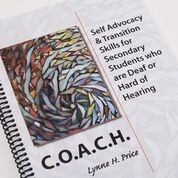
C.O.A.C.H.: Self-Advocacy & Transition Skills for Secondary Students who are Deaf or Hard of Hearing by Lynne H. Price. Used with permission.
Refer to C.O.A.C.H. for specifics on how to work with tweens and teens to teach these skills! Self-advocacy skills are taught beginning in preschool through grade 4, switching to problem-solving for self-determination by age 12. If you only teach self-advocacy without teaching problem-solving for self-determination, you are doing only half the job! See the self-advocacy webpage for more information on skills and age expectations.
The Ida Institute has free Transition Management resources to enhance teaching tweens and teens.
- Living Well Teens and Tweens assists
Image credit: Logo courtesy of the Ida Institute. Used for editorial commentary.
students in formulating questions for their audiologist, describing their hearing loss to others, getting family members involved in supporting communication needs, learning communication strategies, and learning how to self-manage their hearing loss.
- The Ida Institute Tools Archive features “Growing Up with Hearing Loss,” a comprehensive suite of transition management materials designed for families and professionals. This resource includes high-quality, captioned video modules tailored to specific developmental milestones:
- Being a Tween (Ages 9–12): Interactive materials and videos that help tweens begin taking ownership of their hearing technology and recognizing environmental listening barriers.
- Being a Teenager (Ages 12-18): Advanced resources focused on self-determination, preparing for high school or college transitions, and practicing self-advocacy. Although the videos feature British children, they are fully captioned and serve as a fantastic, rich resource for classroom discussion, role-playing, and IEP goal support.
12 free lessons for teens on legal rights, self-advocacy, and personal and interpersonal skills. Thanks to Dr. Kris English for making her e-book. Self-Advocacy for Students who are Deaf or Hard of Hearing is freely available on the SSCHL website. Scroll to the bottom of the self-advocacy webpage to access each of these lessons.
Communication Access and Employment
Communication skills and access to communication are critical to success in employment settings. Being well-versed in communication strategies to support successful interactions is an important skill that needs to be further honed during the transition years. Transition-aged students should have a good understanding of their hearing loss and have practiced explaining its impact in preparation to do so with an employer or coworkers.
Other communication skills include:
- Sharing communication strategies that were previously successful in other settings,
- Showing the employer inexpensive options for making environmental cues visible,
- Asking available resources to offer Deaf awareness training for employers, and
- Knowing about and communicating workplace accommodations.
In addition to meeting academic requirements, students need to have strong self-advocacy, time-management, money management, and independent living skills to be successful in postsecondary settings. By using the Postsecondary Competency Skills Checklist (see Goodies below), IEP teams can help the students evaluate their readiness for postsecondary settings.
Transition for Students Who are “Low-Functioning Deaf”
In 1999, an estimated 2000 students in the US who were Deaf or Hard of Hearing were identified by state vocational counselors as “low-functioning deaf.” This term is defined as having reading levels under second grade, low math, reading, and other subjects (second to fourth grade), and/or having a secondary disability. These students drop out of school at a higher rate than other students with hearing loss. They require a much greater emphasis on vocational and independent-living skills than is now provided in most secondary schools. Read the article by Bowe below for more information. With many similarities to programs for higher-functioning students, transition programs for lower-functioning students with hearing loss should include the following:
- Training students in job-specific skills, preferably on-site
- Prepare them to make good decisions and advocate for themselves
- Emphasize the “unwritten rules” of the workplace and key skills of good team members
- Introduce students to available vocational rehabilitation resources to support career transitions
- Develop an understanding of civil rights (Americans with Disabilities Act) on the job and in the community
- Help students appreciate the opportunities and limitations of government supports (i.e., Supplemental Security Income)
A Step Toward Post-High School Readiness
The Rochester Institute of Technology (RIT) Communication Studies and Services Department provides a broad range of support to expand post-high-school students’ communication skills. Contact RIT to receive a $65 voucher that your students can use toward one of RIT’s summer camps for middle or high school students who are deaf or hard of hearing (grades 5-12).
Workplace Skills for Deaf and Hard-of-Hearing Teens
- Communicating with supervisors
- Requesting workplace accommodations
- Understanding ADA protections
- Problem-solving communication barriers
- Professional self-advocacy
Frequently Asked Questions: Teen Transition Planning for Deaf and Hard of Hearing Students
What is the main goal of teen transition planning for DHH students?
The primary goal of teen transition planning is to shift the responsibility of managing communication access from adults (parents and teachers) directly onto the student. In the K-12 system, accommodations are legally mandated and school-managed. In adulthood, the student must be fully prepared to independently navigate college, employment, and community settings.
At what age must transition planning legally begin on an IEP?
While federal IDEA regulations mandate that formal transition programming must be active by age 16, many states require these measurable goals to be written into the IEP no later than age 14.
⚠️ The DHH Reality: Because building communication resilience, technology troubleshooting skills, and legal literacy takes years, effective transition instruction should practically begin during the middle school years.
What are Industry-Standard Transition Assessments for DHH IEPs
When building a teen’s transition plan, generic “yes/no” forms aren’t enough. High-quality IEP teams utilize these three specific diagnostic tools to discover exact skill gaps:
- TAGG (Transition Assessment and Goal Generator): Developed by the University of Oklahoma’s Zarrow Institute, this online portal collects synchronized tracking versions from the student, parents, and professional educators. It explicitly evaluates nonacademic behaviors like persistence, goal setting, and disability awareness to generate accurate baseline profiles and IEP transition goals.
- Audiology Self-Advocacy Checklist (ASAC): A highly specialized tool designed to track whether a student can independently explain their audiogram, manage daily troubleshooting of personal FM/DM Roger equipment, and use active communication repair strategies.
- Conover Online MECA System: A comprehensive transition, career assessment, and vocational system. It uses hands-on interest indicators and digital work samples to assess whether a student has the foundational life and work skills needed to manage a professional workplace environment independently after high school.
What is the difference between high school and college accommodations?
The shift from high school to secondary education represents a massive legal change that catches many families off guard.
💡 The Golden Rule of DHH Transition: In high school, if a student’s FM system breaks, it is the school’s legal responsibility to find a way to fix it. In college or the workplace, if the student’s technology fails and they stay silent, it is legally assumed that they do not need the accommodation. Independence is not optional; it must be taught.
| Feature / Responsibility | High School (IDEA / K-12) | College & University (ADA / Section 504) |
| Legal Mandate | Success-driven: The school must find the student, assess needs, and provide support. | Access-driven: The institution must protect against discrimination but does not guarantee success. |
| The Burden of Proof | The IEP/504 team identifies disabilities and designs accommodations. | The student must self-disclose, provide recent audiological documentation, and request accommodations. |
| Technology Delivery | The district provides, maintains, and troubleshoots FM/DM Roger systems. | The student must manage their personal devices; the college provides systemic access (e.g., CART/captioning or interpreters). |
What top transition skills should be included in a student’s IEP goals?
To ensure a teen is truly ready for life after high school, their transition goals must address specific compensatory access skills rather than generic milestones:
- Hearing Technology Management: Independently changing batteries, troubleshooting connection issues with Roger systems, and pairing devices with Bluetooth audio streams.
- Communication Repair Strategies: Moving away from passive nodding or saying “What?” to using specific scripts (e.g., “The background noise is blocking your voice. Could you please face me when giving directions?”).
- Workplace Disclosure & Advocacy: Practicing how and when to formally disclose a hearing loss to an employer or human resources department under the Americans with Disabilities Act (ADA).
How can an IEP team accurately measure a student’s transition readiness?
Teams should move away from subjective, generalized checklists. Readiness should be systematically tracked using standardized deaf education tools:
- Deploy Specialized Checklists:
- Baseline Assessment.
- Utilize the Audiology Self-Advocacy Checklists or the Minnesota Compensatory Skills Checklist to pinpoint exactly where communication gaps exist.
- Baseline Assessment.
- Target 90-100% Behavioral Mastery:
- Skill Verification.
- Track whether the student can independently explain their own audiogram, list their required accommodations, and state their legal rights without adult prompting.
- Skill Verification.
- Involve Vocational Rehabilitation (VR):
- Agency Connection.
- Formally invite a state vocational rehabilitation counselor to the IEP transition meeting by age 14-16 to bridge the gap toward postsecondary tuition support, job coaching, and workplace alerting tech.
- Agency Connection.
References
- National Deaf Center on Postsecondary Outcomes. (2022). Transition Planning for Deaf Youth.
- Bowe, F. G. (2003). Transition for deaf and hard-of-hearing students: A blueprint for change. Journal of Deaf Studies and Deaf Education, 8(4), 485-493.
- Minnesota Transition Guide for Teachers of the Deaf/Hard of Hearing (2012)
- Ida Institute
- Supporting Success for Children with Hearing Loss, Self-Advocacy: 12 free lessons for tweens and teens
- Rochester Institute of Technology Summer Camp Program
Additional Resources:
Teens and the Price to Pass as ‘Normal’
Transition Planning for Adulthood
Barriers After High School for Deaf and Hard of Hearing Students
Self-Advocacy Apps
Self-Advocacy as a Stand-Alone Service
The Ultimate Goal: Self-Determination
Teaching Self-Advocacy Skills for Students with Hearing Loss
Don’t Wait, Self-Advocate! Self-Advocacy for Students with Hearing Loss
Self-Advocacy Skills Development for Full Classroom Participation
Download the original article.
Originally published: March 2018
Last update: June 2026