Related Products
For Professionals
- Amplification
- Assessment of Student Skills, Challenges, Needs
- Early Childhood: Infants, Toddlers, Preschool
- Hearing Loss – Identification, Impact and Next Steps
- IDEA Law Summary Information
- Language and Speech Development Issues
- Legal Issues in Serving Children with Hearing Loss
- Listening (Auditory Skills) Development
- Planning to Meet Student Needs
- Self-Advocacy Skills for Students with Hearing Loss
- Self-Concept: How the Child with Hearing Loss Sees Himself
- Social Skills
- Speech Perception & Learning
Related Teacher Tools Takeout Items
Self-Concept in Early Childhood: Infants, Toddlers, and Preschoolers with Hearing Loss
Self-concept in early childhood begins developing at birth as infants experience caring relationships, explore their world, and build trust with the adults around them.
What Is Self-Concept in Early Childhood?
Self-concept in early childhood is the way infants, toddlers, and preschoolers begin to understand themselves through relationships, communication, play, and everyday experiences. Positive interactions with caring adults help children develop confidence, emotional security, independence, and a strong foundation for lifelong learning.
INFANCY TO PRESCHOOL
Exploring new thoughts, feelings, objects, and people
Social-Emotional Milestones
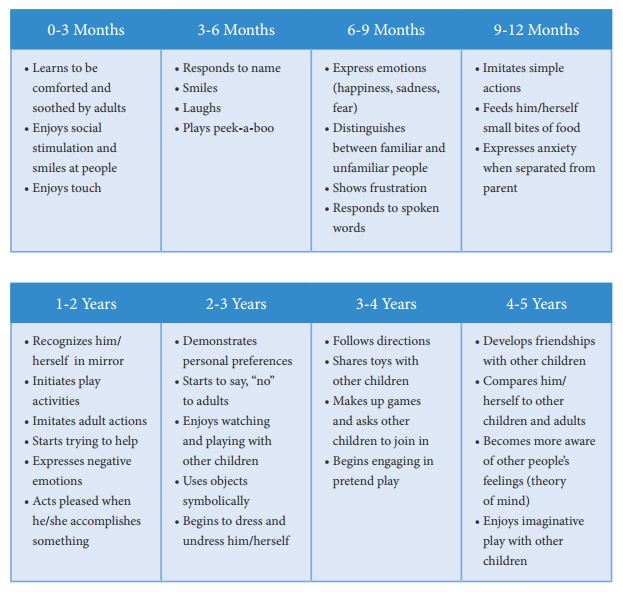
Social-emotional milestones supporting self-concept in early childhood. Image courtesy of Supporting Success for Children with Hearing Loss.
These developmental milestones show how self-concept in early childhood grows through everyday experiences and supportive relationships.
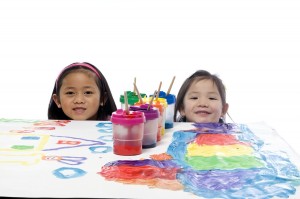
Self-concept in early childhood begins developing at birth as infants experience caring relationships, explore their world, and build trust with the adults around them. It begins with how adults respond to them. Parents and caregivers create a positive emotional bond with an infant through warm and caring interactions with a lot of eye contact and touch. This positive emotional bond with parents and caregivers promotes a child’s healthy self-concept. It is the basis of a relationship in which the child feels the parents’ and caregivers’ love, acceptance, and respect.
© Supporting Success for Children with Hearing Loss / Success for Kids with Hearing Loss.
Why Self-Concept in Early Childhood Matters
Self-concept in early childhood influences much more than confidence. It affects how children approach learning, build relationships, solve problems, and respond to new experiences. For children with hearing loss, early communication experiences and supportive relationships play an especially important role in helping children develop a healthy sense of self.
As the child grows into a toddler and preschooler, their ability to interact successfully with their environment promotes a healthy self-concept.
A child will continue to develop a healthy self-concept when they are given the opportunity to explore their environment, to ask questions without feeling they are a nuisance, and to engage in make-believe play activities.
During this time of exploration, the responsiveness and support of their parents and caregivers will enhance their self-concept. The child’s own responsiveness and support of others will also enhance their self-concept. Through their interactions with others, they begin to think of themselves as being a good person, a valuable part of a group. A strong self-concept in early childhood lays the foundation for emotional well-being, resilience, communication, and lifelong learning.
Signs of Healthy Self-Concept in Early Childhood
As their self-concept develops, young children often begin showing increased confidence and independence. While every child grows at their own pace, these behaviors commonly reflect healthy self-concept development:
- Enjoys exploring new environments
- Attempts new activities
- Seeks help from trusted adults
- Begins making simple choices
- Interacts with other children
- Recovers after small disappointments
- Takes pride in accomplishments
Stage by Stage 0 – 2
|
Stage by Stage 3 – 4
|
Stage by Stage 5 – 6
|
How Hearing Loss Can Influence Self-Concept in Early Childhood
Children with hearing loss develop self-concept just as hearing children do, but communication challenges may influence how they see themselves if appropriate supports are not available. Early intervention, accessible communication, and positive relationships help children feel capable, connected, and included during these important developmental years.
For more information, download the handout Ages & Stages Developing Self-Concept. This 3-page handout provides information on being sensitive to individual needs to support children’s growing sense of self and was excerpted from wonderful information written by Carla Poole, Susan Miller, and Ellen Booth Church.
As children move from infancy into the preschool years, caring adults continue to shape how children view themselves through everyday interactions, encouragement, and opportunities to experience success.
The Important Role of Adults
Adults play an important role in the development of a child’s self-concept. It takes very young children a lot of growing up before they are able to picture themselves as separate individuals capable of thinking and acting for themselves. During the time that they are “painting” this picture of themselves, the relationships they have with those most important to them, particularly their parents, influence the picture they are developing of themselves. Do they feel loved and wanted? Are they able to count on their parents to meet their needs and take care of them? These are important components of a young child’s self-concept development.
How Parents Build Self-Concept in Early Childhood
photography33 / Depositphotos. Used with permission.
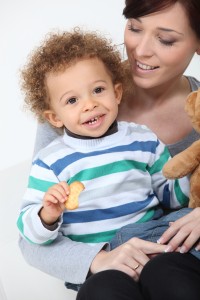
Parents, caregivers, teachers, and early intervention professionals all help shape self-concept in early childhood. Children learn who they are by observing how trusted adults respond to their ideas, emotions, communication attempts, and accomplishments.
Parents play the most important role in shaping self-concept in early childhood through daily interactions, encouragement, and responsive caregiving.
Parents influence self-concept through hundreds of small interactions each day. Predictable routines, opportunities for play, encouragement, and positive relationships all help children develop confidence and a healthy view of themselves.
Establish Predictable Routines That Build Self-Concept in Early Childhood
When events are predictable, your child will feel secure and in control of their world. The predictability of knowing what will happen next helps them prepare for those changes. If day-to-day events are unpredictable, it may feel too scary to fully explore. When children know what to expect, they feel free to play, grow, and learn. Wearing hearing aids or cochlear implants for ALL waking hours is critical to your child with hearing loss learning that the world is predictable and safe.
Encourage Learning Through Play
Through play, children learn how to solve problems and develop confidence. It is also through play that children try on new roles and work out complicated feelings. Let your child lead playtime; this will build their confidence, assertiveness, and leadership skills.
Imaginative play is one of the most effective ways to strengthen self-concept in early childhood because it allows children to safely explore new ideas and abilities.
How Imaginative Play Builds Self-Concept in Early Childhood
During the preschool years, imaginative play becomes one of the most important ways children develop confidence, creativity, communication, and self-concept. Pretend play allows children to experiment with different roles, solve problems, and explore emotions in a safe environment. Through play, children begin to discover what they can do and who they are becoming.
Superheroes, princesses, firefighters, doctors, and other pretend characters give children opportunities to imagine themselves as capable, brave, helpful, and successful. When children pretend to rescue someone, solve a problem, or help a friend, they are practicing confidence, empathy, communication, and perseverance. These experiences strengthen self-concept because children begin to believe they can overcome challenges in real life as well.
Parents can encourage imaginative play by joining in, asking open-ended questions, providing simple props, and allowing children to lead the story. The goal isn’t to create perfect pretend play—it is to create opportunities for children to explore ideas, solve problems, and develop confidence through imagination.
Help Children Understand Their Feelings
Provide language that accurately reflects their experience, shows understanding and empathy, and instills confidence.
Model Confidence Every Day
Children are always keenly watching their parents for clues about what to do or how to feel about different tasks or social interactions. When it comes to learning how to manage emotions like hurt, anger, or frustration, you are their “go-to” person. If you can model persistence and confidence in yourself, your child will learn this too. Try new things and praise yourself aloud. “I was really frustrated putting up that shelf. It was hard to do. When it fell, I was mad. I rested and tried again. Now I’m proud of myself for getting the job done and not giving up.”
Helping Young Children Feel Comfortable Talking About Hearing Loss
As children begin to understand more about themselves, they also begin asking questions about what makes them unique. For children with hearing loss, learning to talk openly about their hearing devices, communication needs, and hearing differences is an important part of developing a healthy self-concept. These conversations do not need to be formal. Simple, positive discussions during everyday routines help children feel confident instead of self-conscious.
Young children are naturally curious. They may ask why they wear hearing aids or cochlear implants, why they hear differently than other children, or why people sometimes notice their devices. Parents can answer these questions honestly using simple, age-appropriate language. These conversations help children understand that hearing loss is just one part of who they are—not something to hide or feel embarrassed about.
When children understand how their hearing devices help them listen and communicate, they become more comfortable talking about them with family members, teachers, and friends. This confidence often grows naturally over time as children gain knowledge and positive experiences.
Parents can also practice simple responses together during play or everyday conversations. For example, a child might learn to say, “These are my hearing aids. They help me hear,” or “I hear differently, so I wear hearing devices.” Practicing these short explanations helps children feel prepared when questions come up naturally.
The goal is not to teach young children to give perfect explanations about hearing loss. Instead, the goal is to help them develop comfort, confidence, and pride in who they are. As children grow, these early conversations become the foundation for self-advocacy, independence, and a positive self-identity. Positive conversations about hearing loss help children develop a healthy self-concept in early childhood while building confidence for future self-advocacy.
Helping Your Child Talk About Hearing Loss
Encourage simple, positive explanations such as the following:
- “These are my hearing aids.”
- “They help me hear.”
- “I hear differently.”
- “Everyone learns differently.”
- “It’s okay to ask questions.”
These short conversations help children feel comfortable talking about their hearing loss as they grow.
Ways to Encourage a Positive & Healthy Self-Concept in Children
- Help children set reasonable goals and evaluate realistically.
- Encourage children to praise themselves.
- Adults, praise yourselves. Children learn by imitating adults.
- Teach children to praise others.
Building self-concept in early childhood happens through consistent encouragement, realistic expectations, and opportunities for children to experience success. Even small daily interactions help children develop confidence that lasts throughout childhood.
Helping children develop a positive self-concept may be one of the most difficult tasks of parenting or teaching. There is no easy, foolproof formula for accomplishing this. It takes a lot of time and effort from concerned adults like you. In order to help you implement some of the suggestions offered, keep in mind the word PRAISE and what each letter stands for:
P–Praise yourself, and help others to do the same.R–Respect children.
A–Accept children.
I–Invest time in children.
S–Set reasonable goals.
E–Evaluate your accomplishments realistically.
For more detailed information on how adults can assist children’s development of self-concept, download the handout Encouraging Positive Self-Concept in Children.
Give Children Age-Appropriate Responsibilities
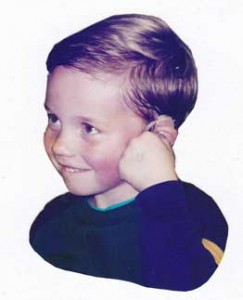
Young child touching their ear. Image credit: Supporting Success for Children with Hearing Loss.
Feeling useful and needed makes children feel important and builds confidence. Jobs should be age-appropriate. Be specific about what is expected. Say, “Please put a napkin on each plate,” not “Help me set the table.” Even two-year-olds can learn to ask Mommy or Daddy for help if their hearing aids/cochlear implants are not working. They can also learn (by age 3!) to be responsible for putting on their own hearing aids. Giving children age-appropriate responsibilities also strengthens self-concept in early childhood by helping them feel capable and valued.
Celebrate Effort and Success
Showing your child that you recognize how he is growing and learning helps to build their confidence. Hooray! You heard that! What a big boy! You are learning to put on your own hearing aids! What a big girl for telling Mommy your hearing aid was not working!
Encourage Children to Keep Trying
Children learn by doing. Break down difficult tasks into small steps to help them feel in control, confident, and safe. As you work on a tough task or skill, let your child know you believe in them and that you won’t be disappointed if they’re not yet ready. You are there to support them whenever they are ready to try again. Learning how to put on hearing aids takes much patience and praise!
Everyday Ways to Build Self-Concept in Early Childhood
Remember that self-concept in early childhood develops through thousands of small experiences rather than one big event. Building self-concept doesn’t require complicated activities. Small moments throughout the day often have the greatest impact. The following ideas can easily become part of everyday family routines.
Along with the PRAISE strategy, adults can strengthen self-concept by:
- Celebrating effort instead of perfection
- Encouraging problem-solving
- Supporting friendships
- Providing choices
- Encouraging communication
- Recognizing individual strengths
- Creating opportunities for successful play experiences
Key Takeaways
✔️ Self-concept in early childhood begins developing at birth.
✔️ Loving relationships create emotional security.
✔️ Communication experiences build confidence.
✔️ Children learn about themselves through interactions.
✔️ Families and educators help children develop lifelong resilience and independence.
Self-concept in early childhood develops through everyday experiences with parents, caregivers, teachers, and peers. Warm relationships, responsive communication, and opportunities to explore the world help children build confidence and emotional security. For children with hearing loss, accessible communication and supportive adults create a strong foundation for lifelong learning, healthy relationships, and positive self-esteem.
Self-concept in early childhood develops one interaction at a time. Every encouraging word, opportunity to explore, caring relationship, and successful experience helps children build confidence in who they are. For children with hearing loss, these early experiences also lay the foundation for communication, self-advocacy, resilience, and lifelong success.
Supporting self-concept in early childhood is one of the greatest gifts parents and educators can provide.
Frequently Asked Questions About Self-Concept in Early Childhood
What is early self-concept, and when does it begin for a child with hearing loss?
Self-concept is the foundational mental blueprint of how a young child answers the silent question: “Who am I, and am I safe, capable, and loved?” This development begins at birth. For infants with hearing loss, early self-concept is forged through consistent, accessible communication, whether that means clear auditory pathways via early device fitting, visual language exposure, or responsive touch and eye contact.
How does hearing loss uniquely impact an infant or toddler’s developing self-concept?
A child’s early sense of self is a mirror of their relationships with primary caregivers. When a young child experiences communication barriers or unmanaged hearing loss, it can lead to moments of shared frustration or isolation during daily routines. Early intervention and robust language access ensure that the child feels completely understood, which is the baseline requirement for building a secure, confident identity.
The Developmental Stages of Early Self-Concept
A child’s identity grows in distinct phases. School teams and families should look for these specific DHH milestones from infancy through the preschool years:
| Age Bracket | Core Self-Concept Focus | DHH Identity Milestone |
| Infants (0–12 Months) | Trust & Connection: Realizing they are a separate person from their caregiver. | Building trust through responsive caregiving, intentional eye contact, tactile touch, and early device bonding. |
| Toddlers (1–3 Years) | Autonomy & Exploration: Realizing “I can do it myself!” and exploring boundaries. | Developing language access to express independent choices and safely exploring their physical environment. |
| Preschoolers (3–5 Years) | Social Identity & Play: Comparing themselves to peers and asking endless questions. | Noticing their own hearing technology or communication differences without viewing them as a deficit or negative trait. |
What are the early signs of a healthy vs. struggling self-concept in a preschooler?
Because very young children communicate their internal emotional states primarily through behavior, look closely for these everyday indicators:
- Signs of a Healthy Self-Concept: Natural curiosity, an eagerness to explore new environments, a willingness to try a task again after failing, and treating their hearing technology as a normal, neutral part of their daily routine.
- Signs of a Struggling Self-Concept: Extreme separation anxiety, intense frustration during minor communication breakdowns, a total fear of making mistakes, or repeatedly pulling off or rejecting their hearing aids or cochlear implants.
What practical sequence can parents follow to support healthy early identity growth?
To ensure your home environment naturally fosters a resilient sense of self-worth from day one, implement this supportive family routine:
- Deploy Warm, Responsive Caregiving:
- Infancy Foundation.
- Prioritize close, face-to-face interaction. Use expressive facial cues, comforting touch, and immediate responses to your infant’s vocalizations or gestures to teach them that their communication has immense power and value.
- Encourage Safe Independence and Language Choices:
- Toddler Autonomy.
- Give your toddler minor, manageable choices throughout the day (e.g., “Do you want to wear the blue socks or the red socks today?”). Give them the explicit vocabulary to express their needs, feelings, and boundaries.
- Normalize Hearing Differences Through Play:
- Preschool Socialization.
- Incorporate inclusive toys and children’s literature featuring characters who wear hearing technology or use sign language. Cheerfully answer their curious questions about identity, and proactively pair them with other DHH peers to normalize their lived experience.
For a HANDOUT of this page, go to Helping Your Child Build Self-Confidence
This information was excerpted from the excellent resources available at ZERO TO THREE.
Additional Resources:
Bullying and Students with Hearing Loss: What Parents and Educators Need to Know
Self-Concept Assessment Strategies for Adolescents with Hearing Loss
How They See Themselves: Self-Concept in Children with Hearing Loss
Self-Concept: School-Age Children with Hearing Loss
Supporting Self-Concept in Students with Hearing Loss: 3 Go-To Ideas
Self-Identity and Hearing Loss
Addressing Self-Esteem and Issues of Fitting In
Teens and the Price to Pass as ‘Normal’
Reducing Stigma and Peer Victimization for Students with Hearing Loss
Bullying and Teasing: Protecting Students with Hearing Loss
Supporting Mental Health of Deaf and Hard-of-Hearing Students in the School Setting
What I Wish My Educators Had Known: 20 Tips from Mainstream Deaf and Hard-of-Hearing (DHH) Individuals
Originally published: June 2017
Last updated June 2026