Essential Team Roles in Supporting Students with Hearing Loss – Canada
The successful academic and social integration of students with hearing difficulties requires a dedicated team of specialists.
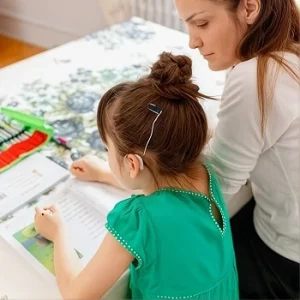
Crucially, the roles of the Educational Audiologist, the Clinical Audiologist, and the Teacher of the Deaf and Hard of Hearing (TODHH) are distinct yet complementary, each contributing unique expertise to the student’s success.
The Distinction Between Educational and Clinical Audiology
Educational Audiology is a subspecialty that focuses on the audiologic needs of children within the school environment (ages 3–21), which is vastly different from managing their needs in clinical or hospital settings.
| Educational Audiologist | Clinical Audiologist | |
|---|---|---|
| Primary Setting | School environment, providing on-site support. | Clinic, hospital, or private practice. |
| Core Focus | Management of a student’s audiologic needs for daily living and learning activities to ensure full communication access in all learning environments. Audiologic needs are integrated with variables unique to each learner (e.g. literacy, learning style, fatigue, self-determination). |
Assessment and treatment of hearing disorders, medical/surgical intervention, and fitting/obtaining personal hearing technology (hearing aids, cochlear implants). |
| Advanced understanding of… | Functional Auditory Access: In-depth knowledge of classroom acoustics, assistive listening systems (e.g., DM systems), and the educational impact of hearing loss. |
Medical management, advanced diagnostic assessments, and programming of personal amplification devices. |
| Assessments | Focuses on educationally relevant evaluations, including assessing listening performance in the classroom environment. |
Focused on auditory assessments and medical candidacy for devices. |
| Collaboration | Effective communication between clinical and educational audiologists is essential. The partnership, fostered by trust, ensures that appropriate accommodations and technology are effectively implemented and maintained, preventing the student’s communication needs from falling through the cracks. |
|
The Distinction Between Educational Audiologists and Teachers of the Deaf/Hard of Hearing (TODHH)
Both the Educational Audiologist and the TODHH are essential advocates and members of the school support team, but their areas of practice are focused on different aspects of a student’s needs
| Educational Audiologist | Teacher of the Deaf/Hard of Hearing | |
|---|---|---|
| Primary Practice | Auditory Access and Technology Management: The physics of sound, acoustics, electroacoustic verification and validation, and ensuring all listening systems are functioning optimally. |
Curriculum, Language, and Psycho-Social Development: Possesses knowledge of the curriculum and how hearing loss impacts language, literacy, auditory, and communication development. |
| Key Responsibilities | Technology Maintenance: Consults on using personal amplification with school-owned classroom audio distribution systems, and managing classroom noise and acoustics. |
Instructional Support: Designs and oversees individualized programming, teaches effective instructional strategies, and provides meaningful adaptations or modifications to curriculum. |
| Team Focus | Ensures the student can physically hear and access auditory information in the educational setting. |
Addresses how the student processes and uses the accessed auditory information for learning and social/emotional growth. |
Summary of Educational Audiologist Services
Educational Audiologists are employed by schools to provide the necessary support that ensures full access to education for students with hearing loss. Key services include:
• Optimizing the Environment: Measuring classroom noise and evaluating acoustics to improve the listening environment.
• Technology Management: Evaluating, recommending, and ensuring the proper fit and functioning of all personal and classroom hearing access technology, including DM systems.
• Training and Consultation: Providing training to school personnel, students, and parents on the effects of hearing loss on academics, learning, and behaviour.
• Building Self-Advocacy and Self-Determination: Empowering students with the skills to advocate for their own hearing needs and become independent learners.
Conclusion
Students with hearing and listening problems may perform well below their academic potential or be stressed and fatigued simply because they cannot hear clearly enough to understand instruction. The Educational Audiologist is the specialized professional who manages all systems impacting communication and learning to ensure that every student has the opportunity for an appropriate education. The unique and complementary roles of the Educational Audiologist, Clinical Audiologist, and Teacher of the Deaf/Hard of Hearing are all essential for providing comprehensive support.