Hearing Loss Related to Childhood Ear Infections
How many children experience ear infections?
Ear infections or fluid behind the eardrum are the main causes of hearing loss in young children, most commonly affecting children up to approximately 7 years of age.
- Nearly every child will have at least one ear infection.
- Ear infections are the second most common illness in children.
- Untreated ear infections can cause more serious medical/hearing problems.
What is an ear infection?
Children’s ear infections are formally known as otitis media. Fluid and/or infection can collect behind the eardrum and may cause hearing difficulty. Signs and symptoms of an ear infection in young children may include the following: pain, fever, fussiness, tugging on the ears, or discharge or blood coming from the ears. Some children may not show any signs at all.
Why do children get ear infections?
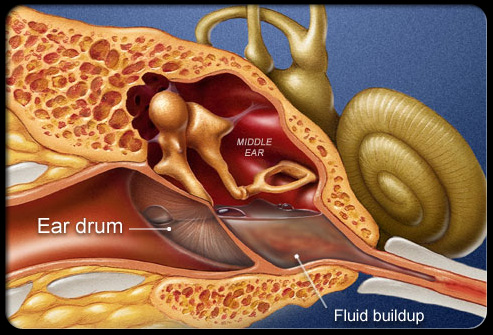 Sometimes you can feel your ears ‘pop’ during altitude changes or if you have a cold. The Eustachian tube connects your throat to your middle ear. It opens periodically to let air into the middle ear. If the Eustachian tube that connects the middle ear to the back of the throat does not open properly, fluid can build up behind the eardrum. Bacteria or viruses can move into this fluid and cause an infection. As children get older, the size and position of the Eustachian tube changes, and they usually get fewer ear infections; however, it may be difficult to determine the reason for a child’s ear infection. The following increase the risk for ear infections:
- Family history of ear infections
- Contact with sick children
- Head and neck abnormalities such as a cleft palate
- Smoking in the home
- Allergies
- Asthma
- Cold and flu season
- Bottle feeding while the baby is laying on his/her back
Why should you be concerned about ear infections?
Ear infections can cause temporary hearing difficulties. Children with ear infections may hear sounds as muffled or unclear. Ear infections may also contribute to poor development of listening skills, as well as difficulties with speech and language, learning, attention and behavior.
Untreated Ear Infections
I gnoring ear infections could possibly result in serious medical and/or hearing problems. If ear infections are left untreated, one possible result could be a cholesteatoma. A cholesteatoma (ko-less’-tee-a-toe-ma) is rare, especially in children. Typically, it is a growth in the middle ear. Although cholesteatomas usually occur in just one ear, it is possible for them to affect both ears. This growth can sometimes be present behind the eardrum at birth, but typically develops later, sometimes as a complication of middle ear infections. A cholesteatoma is not a tumor and is not cancer. The hearing loss related to a cholesteatoma can range from 15 dB up to 60 dB. It typically affects low pitch sounds more than high pitch sounds, although all hearing may be affected.
If a child has a conductive hearing loss in one ear that will not get better, then it is appropriate for him/her to use a hearing aid on the ear with the hearing loss. There are different options for hearing aids for people with conductive hearing loss and your audiologist can help you decide which device would be most appropriate.
Risks for Education
 Children who started having ear problems early (0-12 months), and frequently (more than 3 per year) are at the greatest risk for developing learning, attention and behavior issues secondary to inconsistent hearing. Mass school-hearing screenings were an effective way to identify hearing loss and potentially related middle ear involvement. They used to be commonly implemented, but are now typically limited to Kindergarten or First Grade. This makes it important for parents and teachers to be aware of chidren’s hearing/listening behaviors.
During Preschool/Kindergarten it is important to identify the children who have a history of ear infections, hearing loss in the family or whose family members have been concerned about the child’s hearing. The History of Ear and Hearing Problems Parent Checklist was designed to be completed by parents. It is available on paper or in an interview format. It should be used during school hearing screenings in early childhood, but can also be used to highlight awareness of behaviors that are related to potential hearing loss. Read more on the Ear Infections and Learning page.
Resources:
American Academy of Otolaryngology – Head and Neck Surgery: Middle Ear Infections (Otitis Media) and Hearing Loss
Inheritance and Genetics of Cholesteatoma
Ear Infections in Children and Adults
Posted March 2017. Sincere thanks to Krista Yukow, educational audiologist, for contributing to this content!